Watching the Oscar-nominated documentary “The Eternal Memory” gave me a new perspective on my mom’s Alzheimer’s and my parents’ deaths. Director Maite Alberdi shares the compelling story of Augusto Gongora, a producer and editor, and Paulina Urrutia, an actress, a married couple in Chile, and their story of living with Augusto’s Alzheimer’s. Because the grief for my parents was still so fresh, it’s not a documentary that I would have gravitated towards. However, after seeing the interview with Maite on The Daily Show, I immediately watched the documentary and have been recommending it ever since. My biggest takeaway from this documentary was changing the focus from how my parents’ died to seeing their lives through the long lens of a lifetime love story.
My parents had been married 62 years at the time of my mom’s death. By their
seventh anniversary, they had five children. Dad worked long hours at his ice
company and later at Syracuse University, and Mom worked raising her quickly
growing brood of children. Dad always ensured mom had help, and they would make time to go out for dinner or other occasions as often as possible. Although Dad never changed a diaper, he was a supportive husband and loving father. Mom attended nursing school when my youngest sister was in 4th grade to get her licensed practical nurse degree. She worked as a private duty nurse for a while before renewing her x-ray technician certification, a job she would do until retirement.
In anticipation of their retirement, my parents bought a home in a North
Fort Myers senior community, where their friends had already retired. Once they
were both retired, my parents would spend the winters in Florida, away from the
cold and snow of central New York. I found something my dad wrote after he died, comparing living in a retirement community to being in high school with cliques and groups. Having worked since he was a teenager, it was a bigger transition for Dad. He worked for a tax company most of the time when they lived in Florida, enjoying meeting people and seeing them on an annual basis. Mom, on the other hand, immediately took to retirement, enjoying every activity that the community had to offer: writing her memoir, book club, and choir, just to name a few. She would drive her golf cart to the pool and swim every afternoon. My parents enjoyed visiting with friends, celebrating holidays of every kind, and playing poker every week at the clubhouse. My parents also took a couple of cruises and road trips. They enjoyed spending time with their children and grandchildren. But mostly, they loved spending time together.
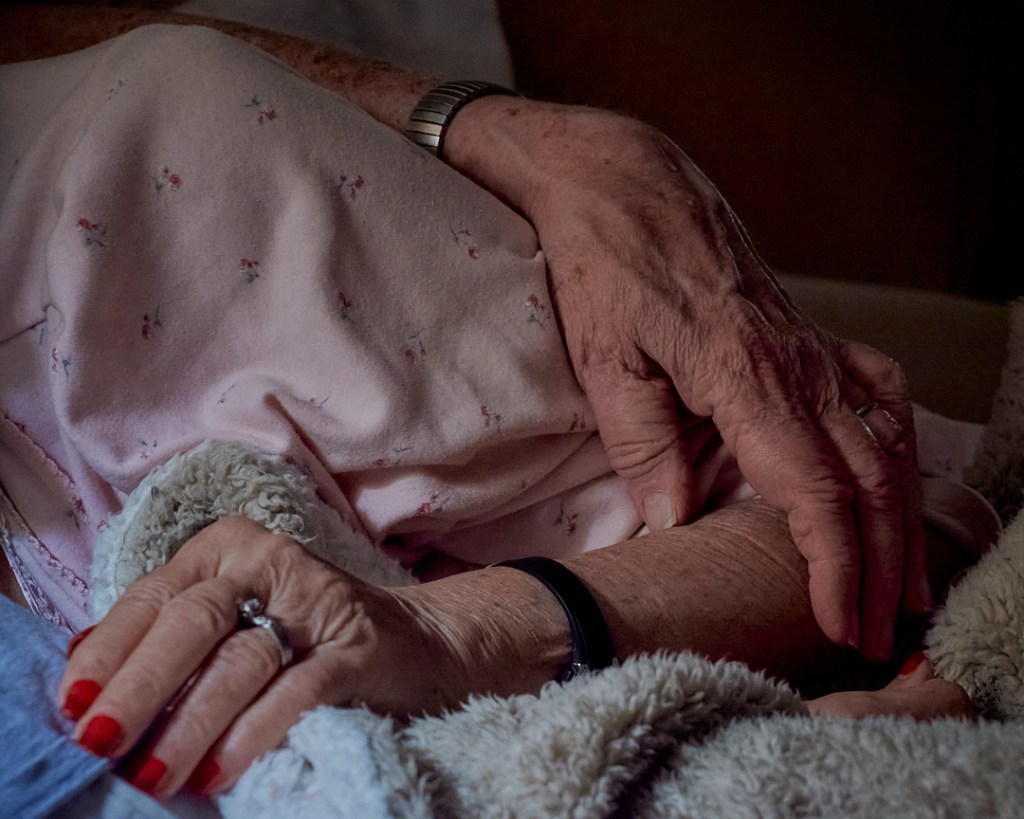
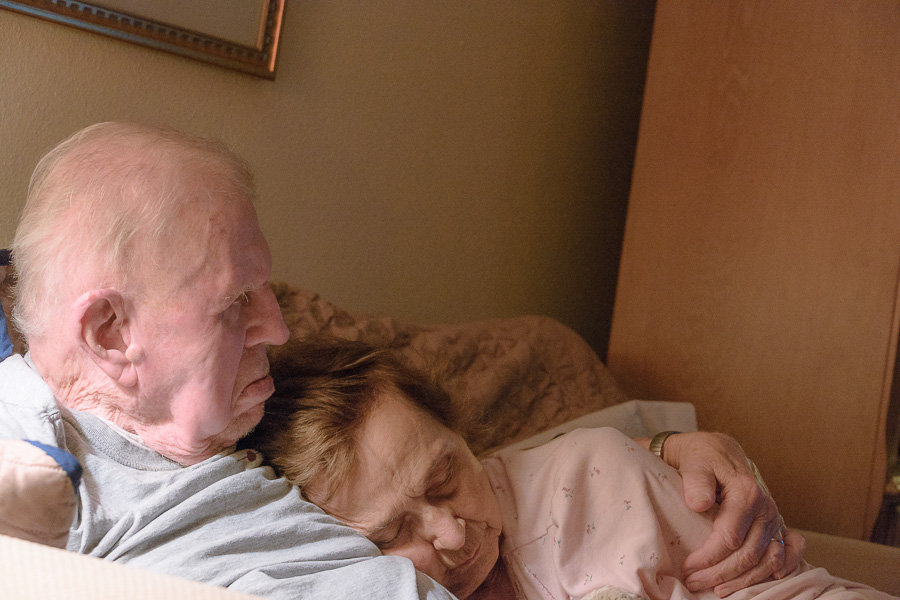
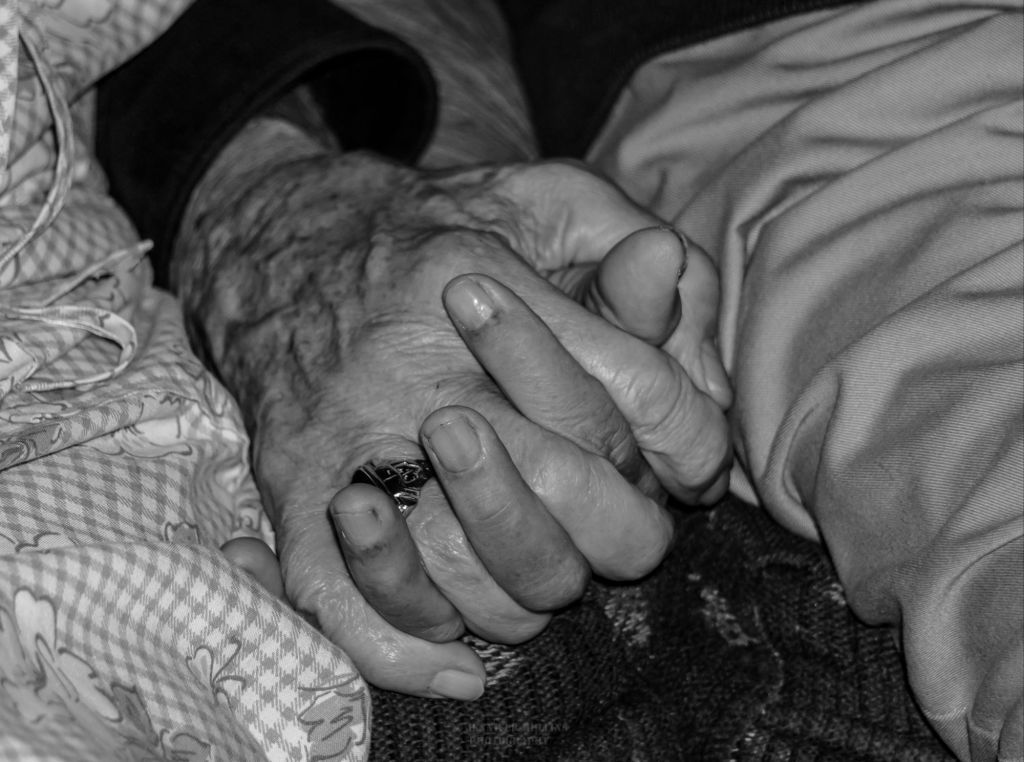
At night, if they weren’t playing cards, they would be found sitting on the loveseat watching TV. As mom’s health declined, they usually watched their favorite musicals on a loop. There was comfort in the familiarity of the songs they had heard a million times. They would enjoy a bowl of ice cream or ice cream bars they always called “ice cream on a stick.” Their hands would always be intertwined as they sat, sometimes singing along, while other times just enjoying each other’s company. I always found this the most beautiful act of intimacy. No words needed, just the uniting of hands that had spent a lifetime together. Sometimes, Mom would rest her head against my dad’s chest, falling asleep in the crook of his arm. Dad was Mom’s cornerstone as her memory faded, and he was always by her side, making sure that she was okay and had what she needed.
My dad, like Paulina, would try to find moments that would bring my mom joy.
He would remind her of things they had done, or people in their life. When mom didn’t remember, he would be patient with her. The documentary occurred during the pandemic, and there was a scene when Paulina’s distress came to a head as Augusto declined significantly because of the isolation. It reminded me of when my mom had to be admitted to the hospital for emergency surgery, and my dad wasn’t allowed to be there. For almost two weeks, the only way that he could communicate with her was by phone. Every time Mom would ask him when he was coming to see her, it would break Dad’s heart, knowing that he was helpless to comfort her. I was with my Dad during this time, and this was the most distressed I’ve ever seen him. It was only when Mom finally came home that Dad could breathe again.
A love story is not about grand gestures, picture-perfect moments, or
happily ever after. It’s about being present through all the events of life,
especially the hard ones. It’s the quiet moments where you seek solace in the
person who has seen all sides of you and still shows up. Life is full of small
moments that we forget, but that build a lifetime of memories. My parents had
their ups and downs, like any married couple, but it was their love, faith, and
commitment to each other that carried them through. Death is inevitable, but it’s how we live and love that lasts long after we are gone.
Discover more from Beautiful Bittersweet Life
Subscribe to get the latest posts sent to your email.
 Beautiful Bittersweet Life