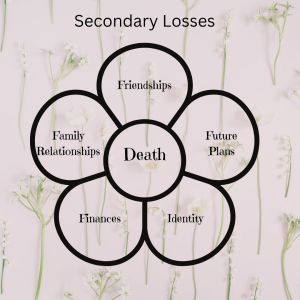
Grief is complicated because it is not only the death of the person you love but also the secondary losses that come with death. Nothing prepares you for the excruciating pain that accompanies death. However, it’s the unexpected secondary losses that nobody really talks about. They include changes to finances, friendships, family relationships, identity, and the future that you thought you had.
Depending on who died, there can be a significant loss in your financial situation. I was fortunate when my husband died that he had a life insurance policy and retirement through the state system. However, I would have preferred that Mike was alive instead of the money. For most of our marriage, he had been the primary breadwinner. I had been a substitute teacher for 11 years and owned my own tutoring business, so I had a source of income. However, I was the one who paid the bills and managed the money. A few months before Mike died, we would sit down and do the checks together every two weeks when he would get paid. I’d recently had surgery and wanted to make sure that he would know where the money was going in case I died before him. Even though I knew how to manage the money, my brain was overwhelmed by grief, and I had to turn to other people for assistance.
After Mike’s death, one of the more painful things was the change in some of my friendships. I was fortunate to have some good friends who stood by me through the most challenging times after the initial shock of Mike’s death. The same friends have also been my strength as I endured the grief of having my parents die this year. What was more painful were the friends that I thought would be there for me who weren’t. I had one friend I had been there for when she was going through her divorce from her husband when the kids were little, and we lived back east. Unfortunately, when I called her to let her know about Mike’s death, she could not reciprocate that support. I felt so fragile, and it hurt to think she couldn’t be there for me when I needed her. I talked to her a couple of times about it, but eventually, the friendship just ended. That’s the reality of grief. With so little energy to spare, I had to learn whom to keep in my life and whom to let go of.
Family dynamics are affected by the stress of the death of a loved one. Part of it depends on the type of death, and the other is the family relationship before death. Mike’s death was the result of an accidental overdose. This alone comes with so much stigma, and there were opinions that people brought to the situation. My parents were always supportive and compassionate. Although I received support initially, Mike’s name would often not come up in conversation after he died, like he didn’t exist. That was very painful! With the death of my parents seven months apart, we all came at our grief from different angles. There is no one way to grieve and no wrong way as long as you don’t hurt yourself or anyone else. However, these differences can also negatively affect the relationships that we share. The glue that held me to my family was my parents. When they died, I felt unmoored from my connection to my family.
Being human is being in a relationship with others. We come into this world as our parents’ children. Along the way, we develop many identities: brother, sister, friend, boyfriend, girlfriend, spouse, and parent, to name a few. When death ends a relationship, which will happen to everyone at some point, it leaves us feeling adrift. Who am I in this new world without the person who I loved no longer here? It took me a long time after Mike died to stop saying we. Although Mike is a part of my DNA, I had to define who I was alone. With the death of my parents, I’m going through the process all over again. It doesn’t get easier.
When Mike died, one of the most complex parts was the death of the dream future I had imagined. Although he struggled with addiction, as long as he was alive, there was hope that he might get better. When we were younger, we talked about what we would do once the kids were grown and on their own. Now they’re grown, and I’m on my own. With my parents passing, I feel I’ve lost that safe place I could turn to when I needed support and compassion. Not that they could fix things like when I was a child, but knowing they were there made such a difference.
Many triggers bring grief to the surface, but secondary losses intensify the pain left when the person you love is gone.
Discover more from Beautiful Bittersweet Life
Subscribe to get the latest posts sent to your email.
 Beautiful Bittersweet Life